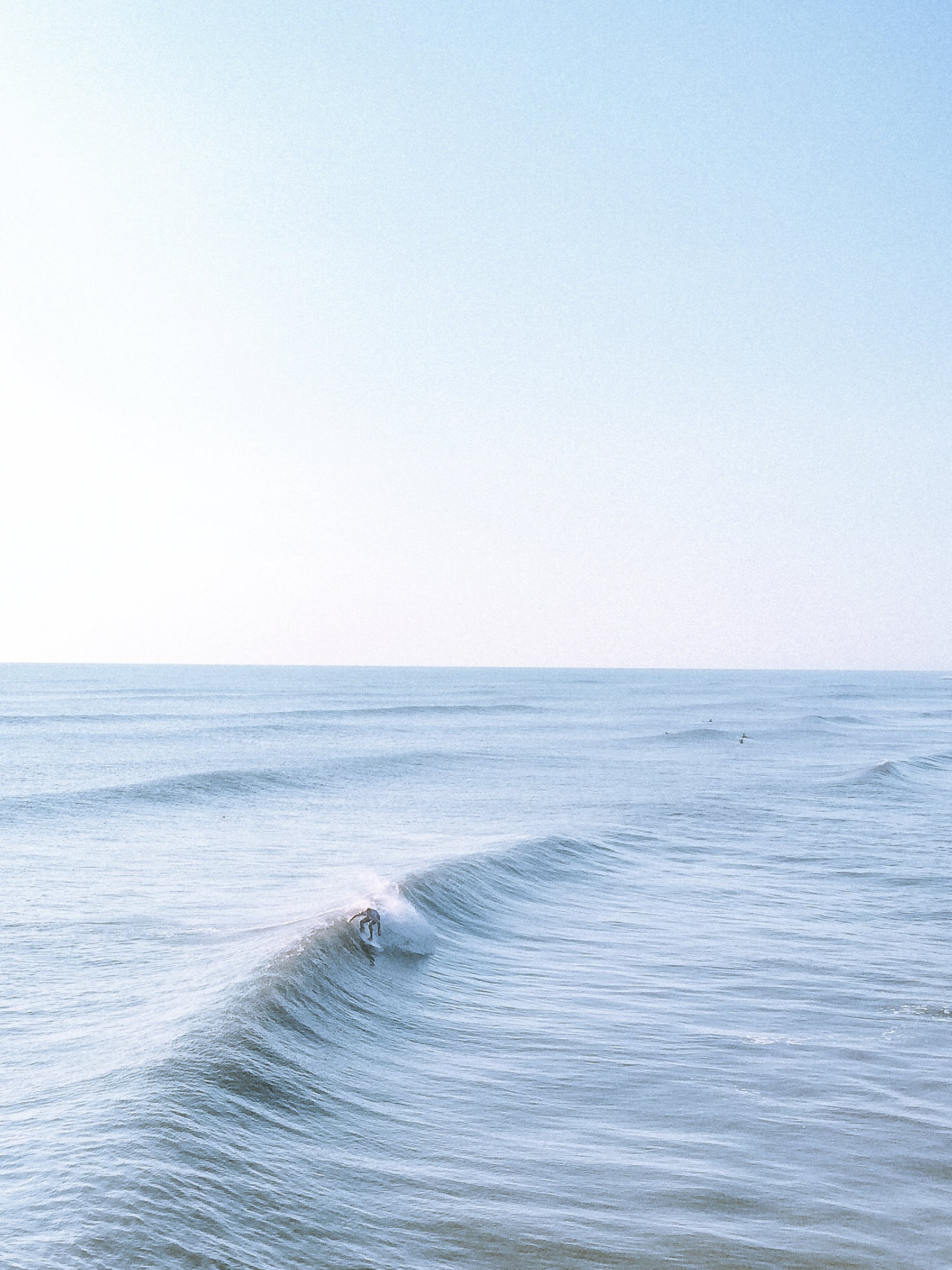
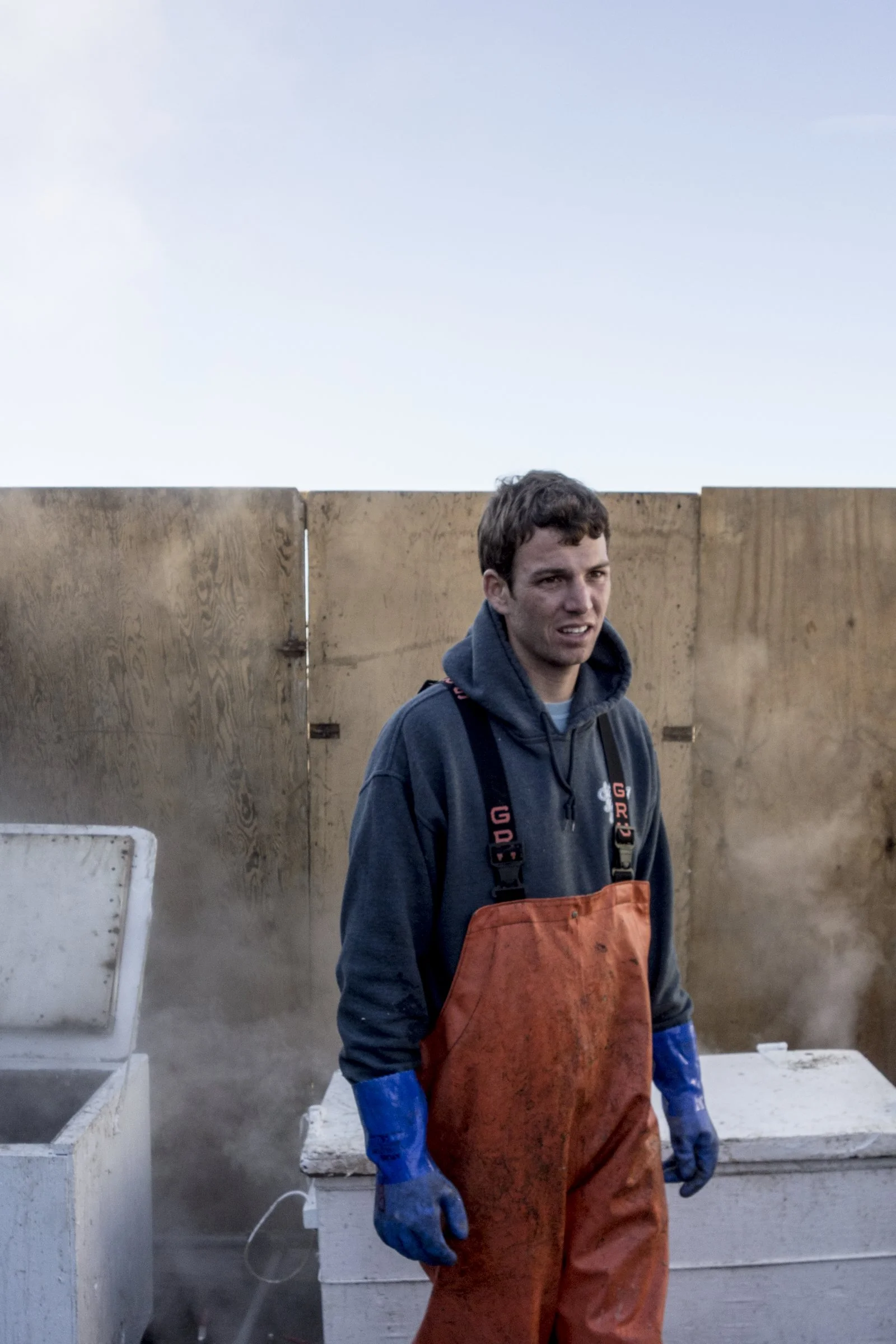
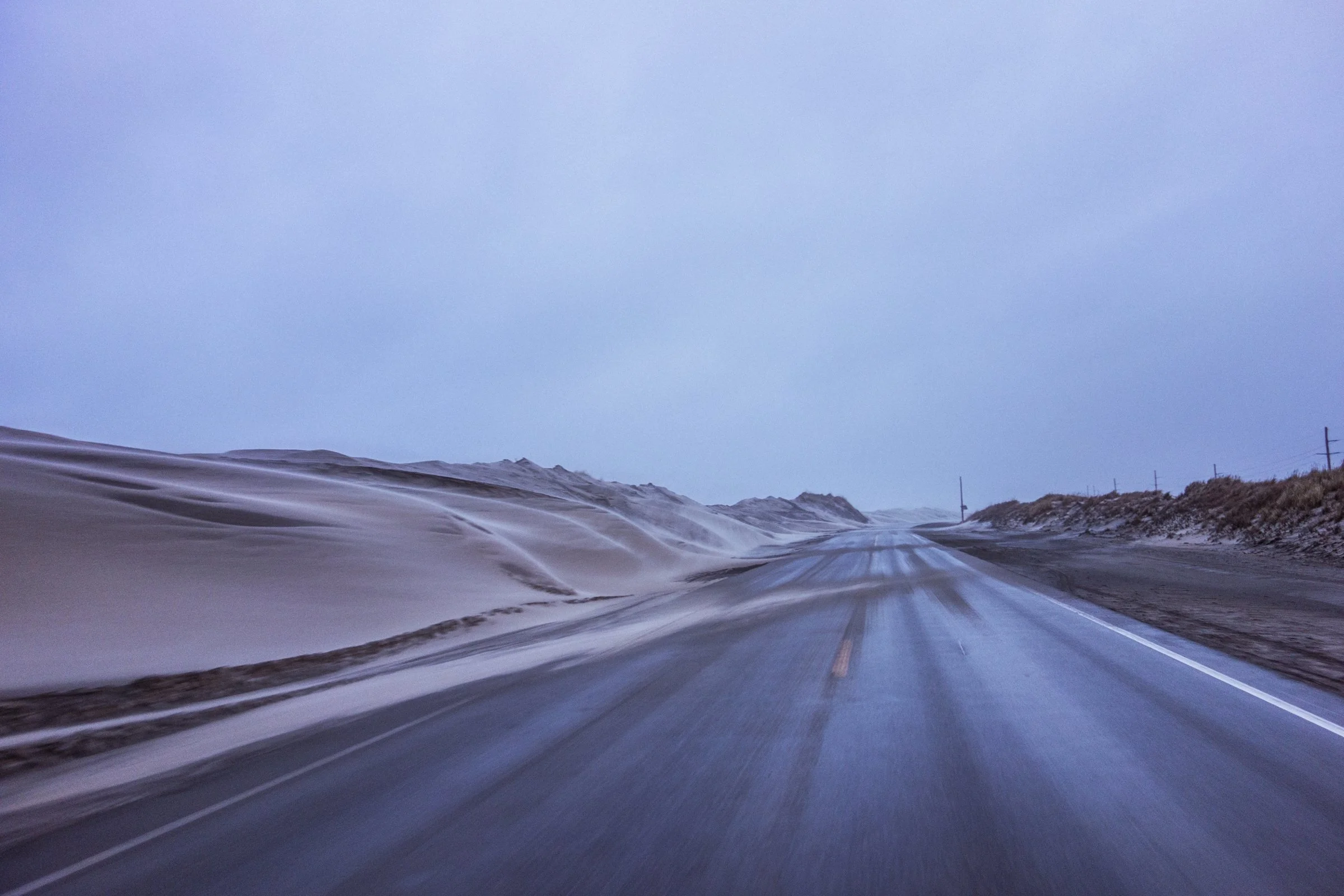
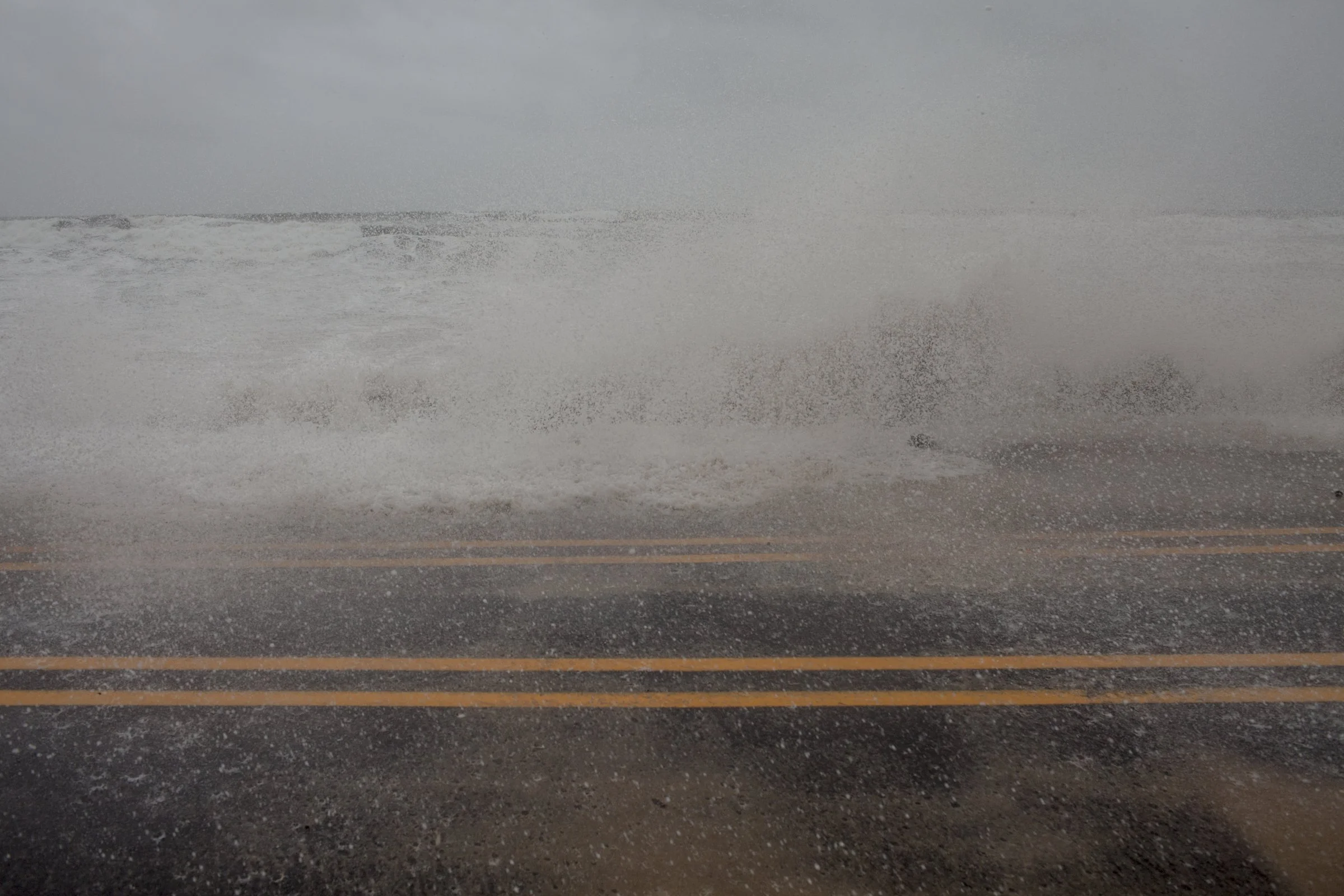
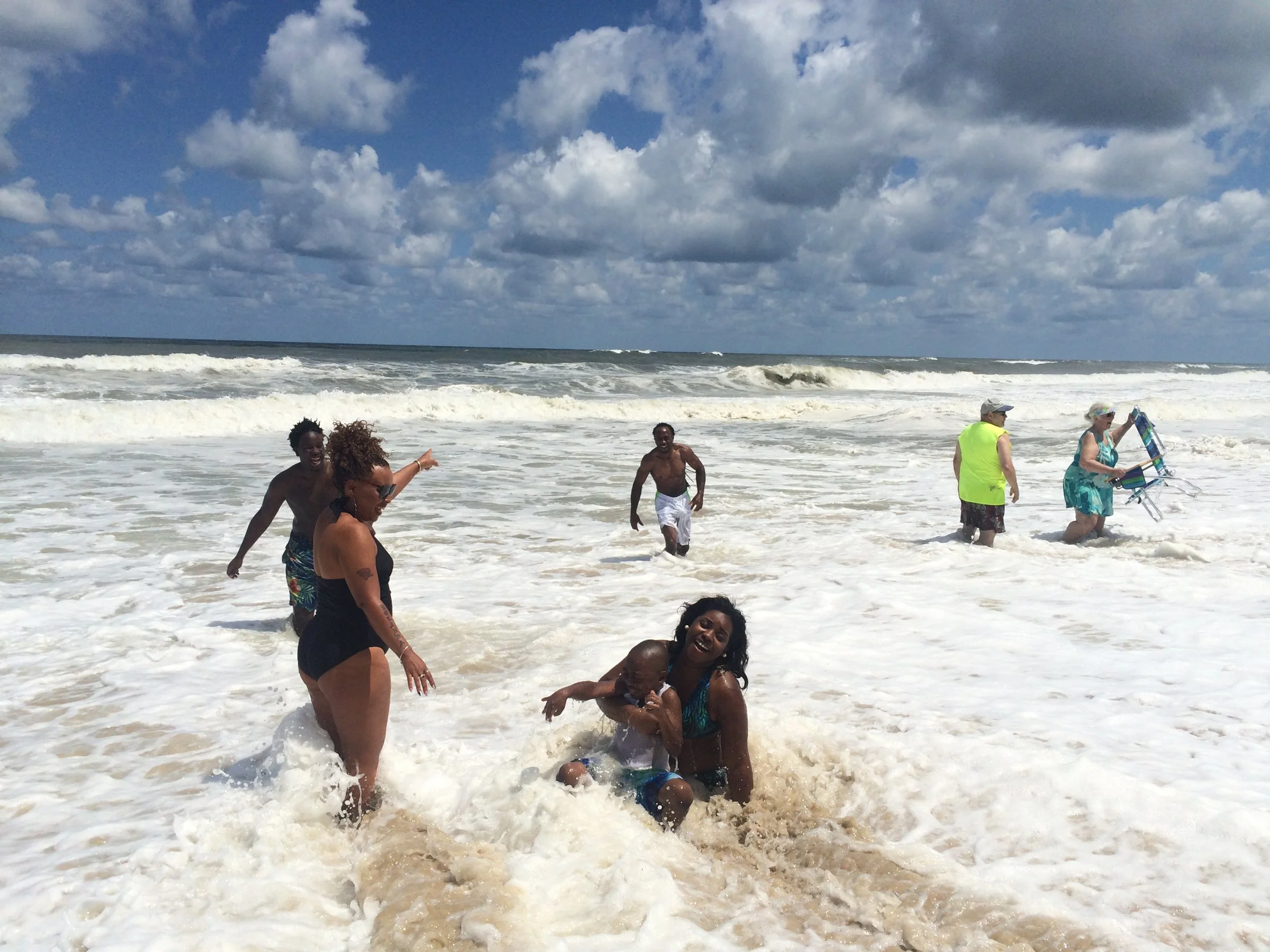
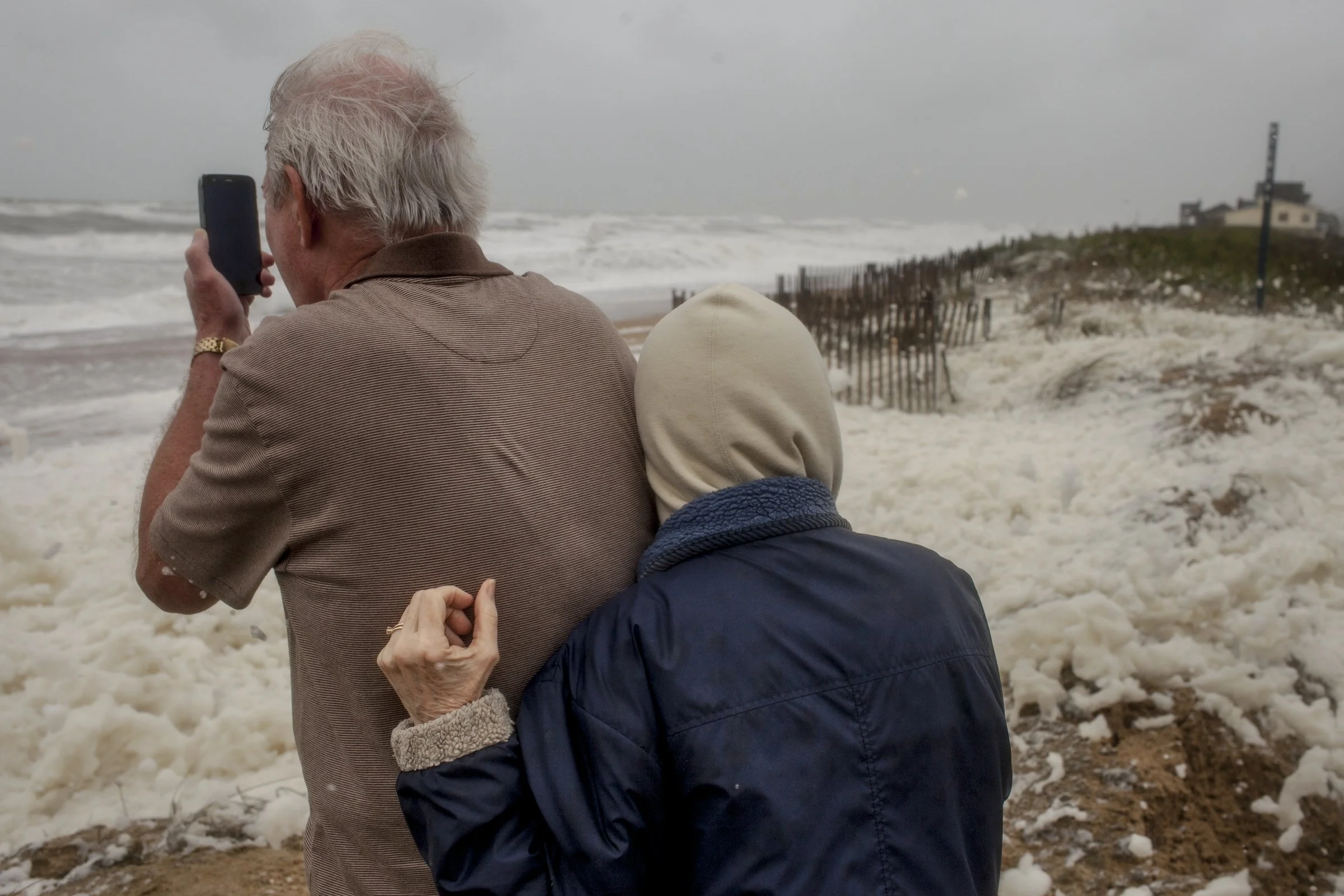
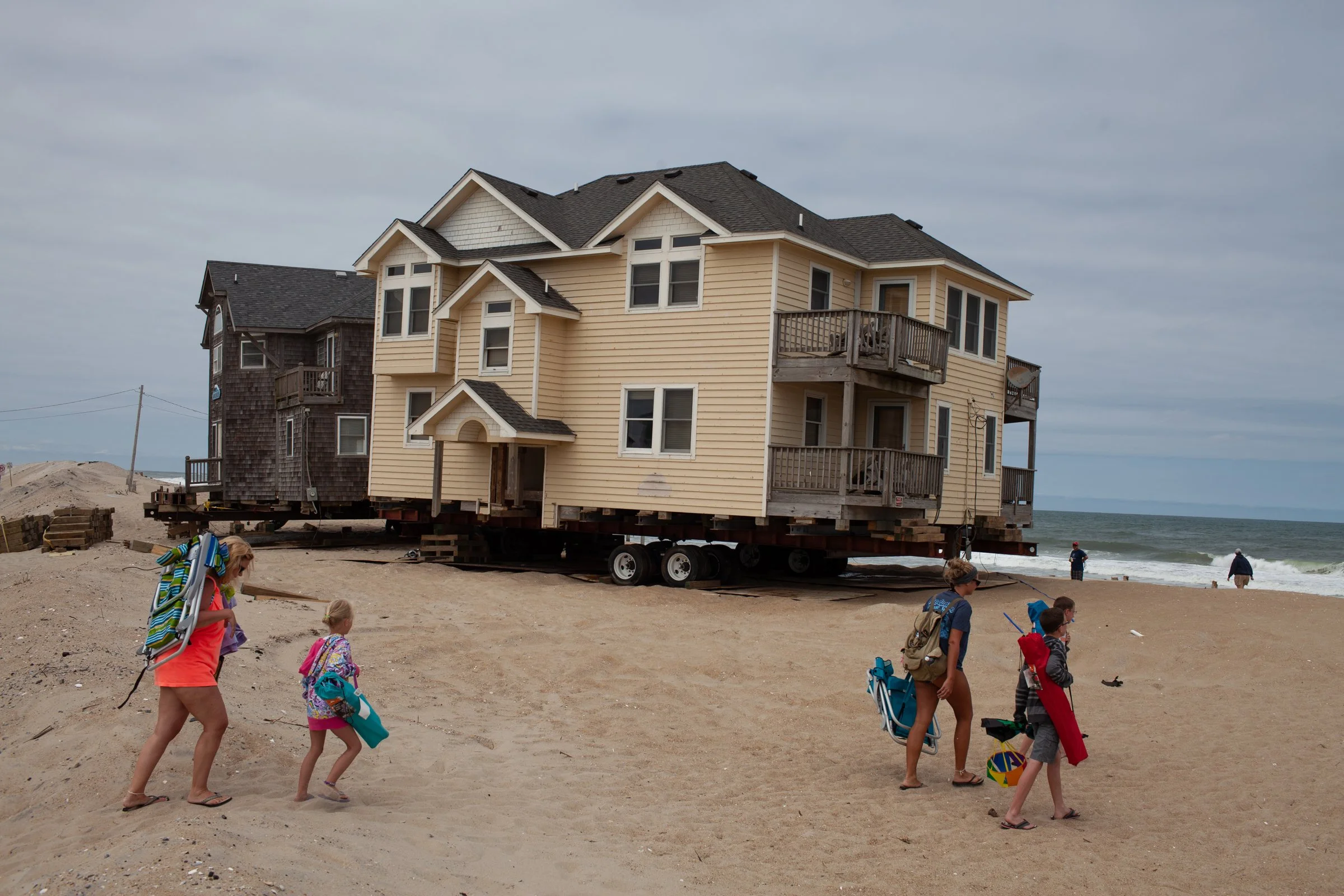
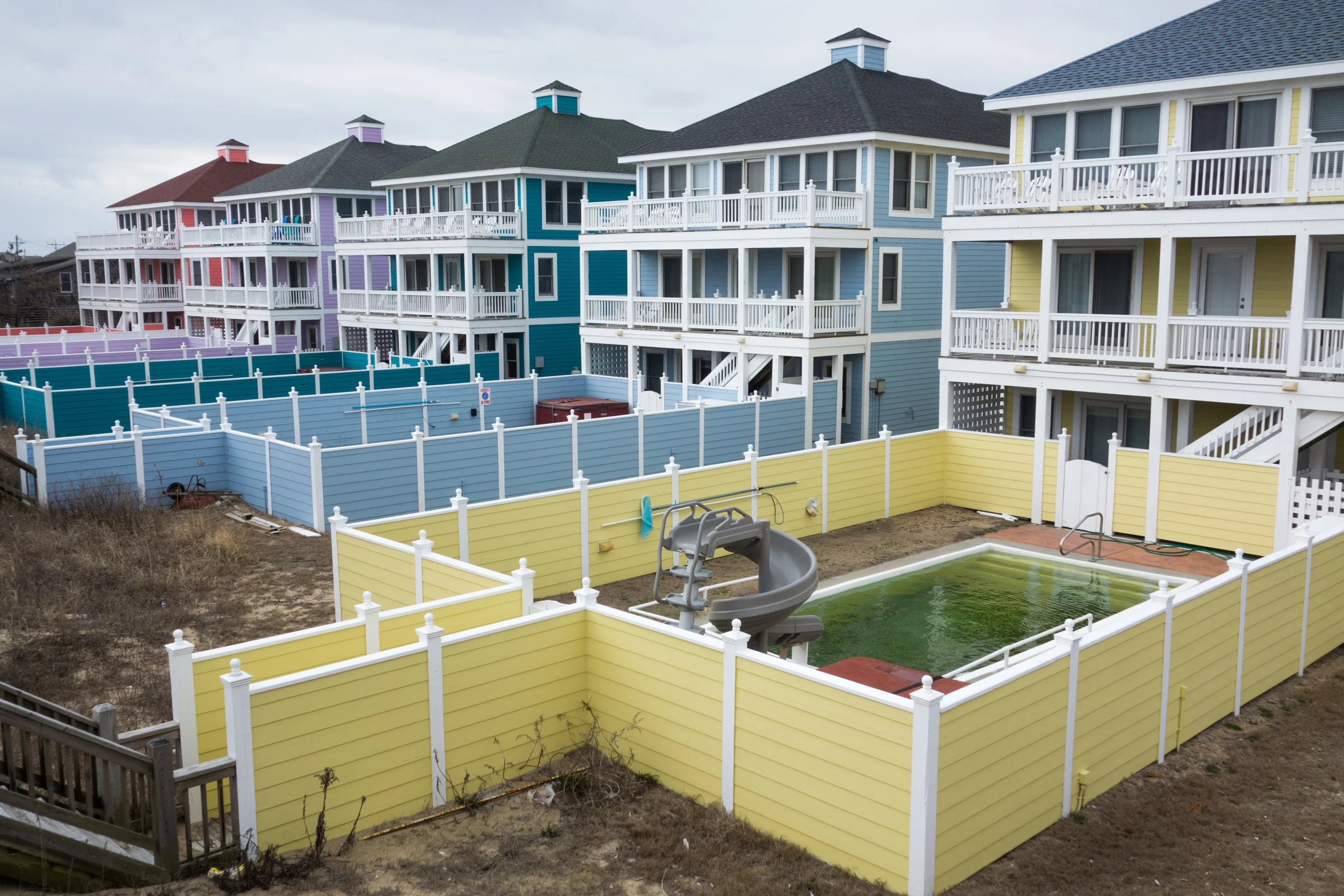
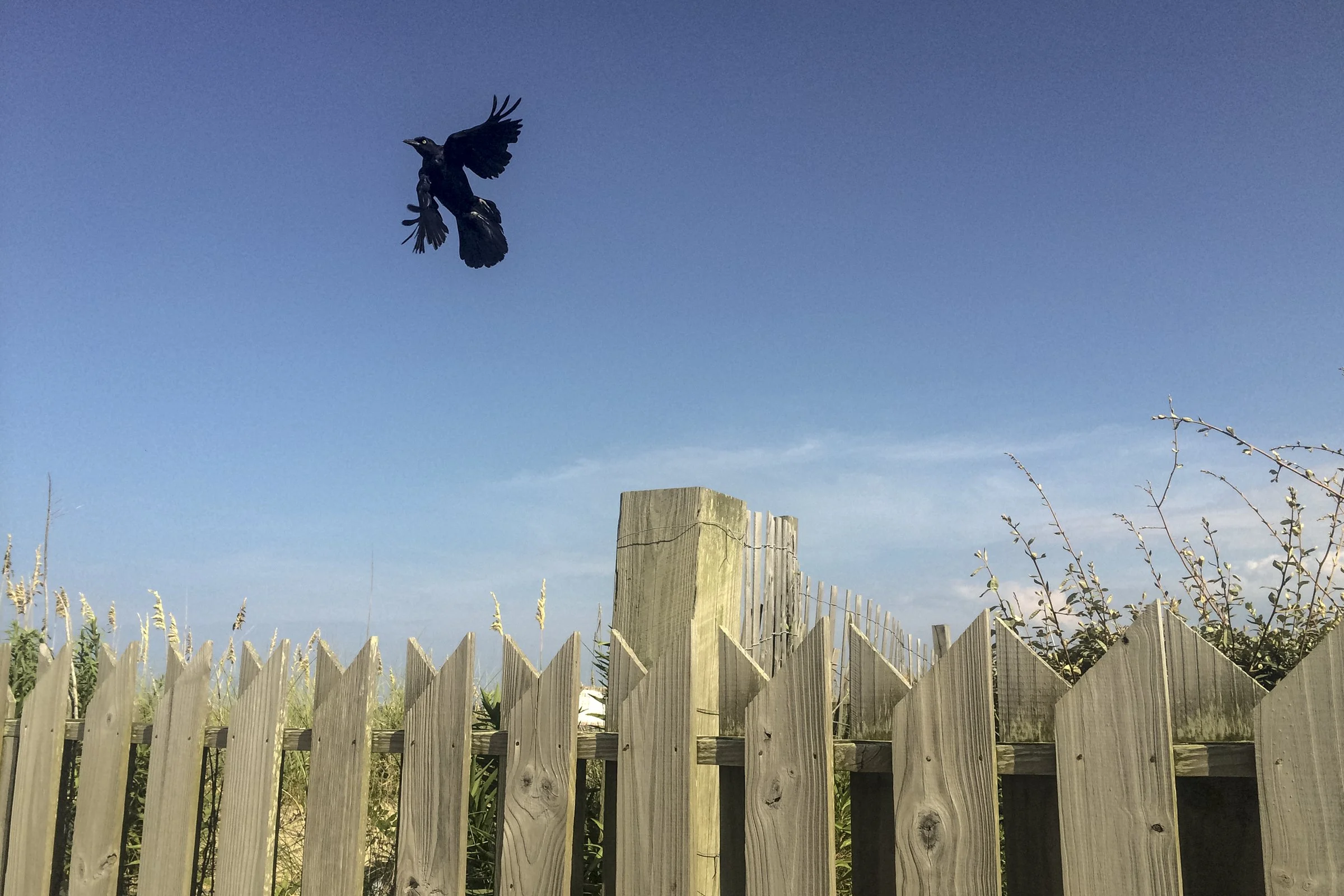
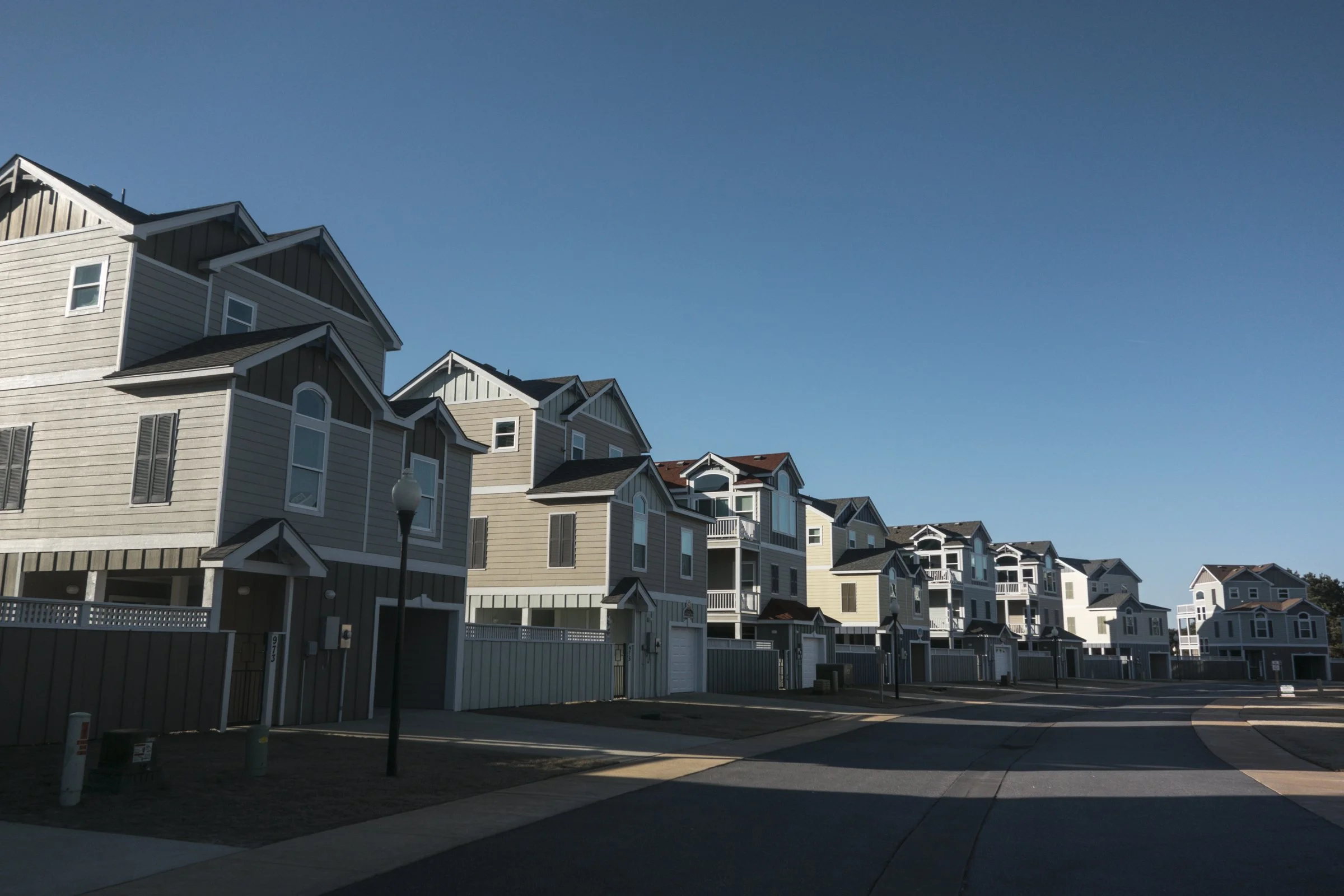
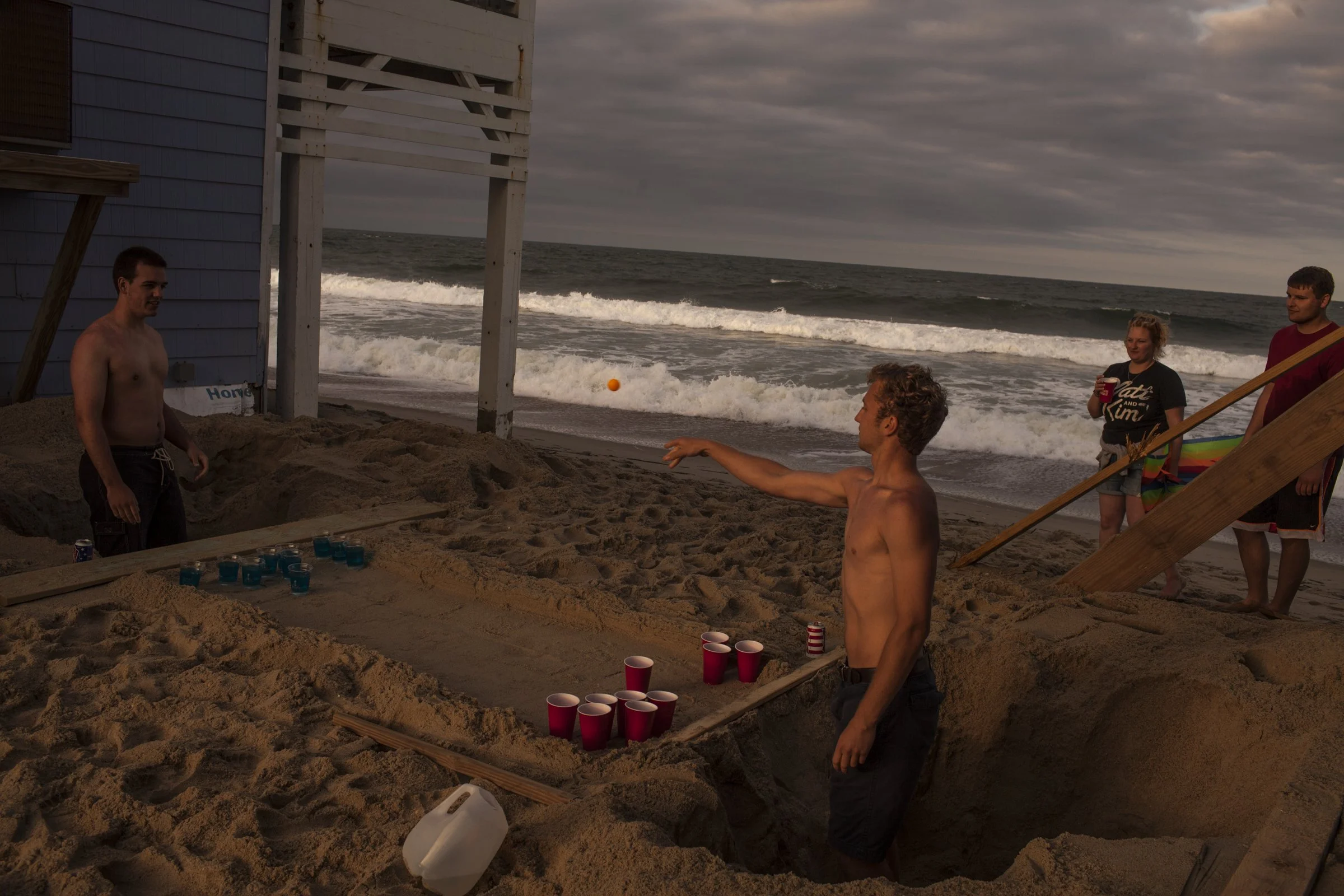
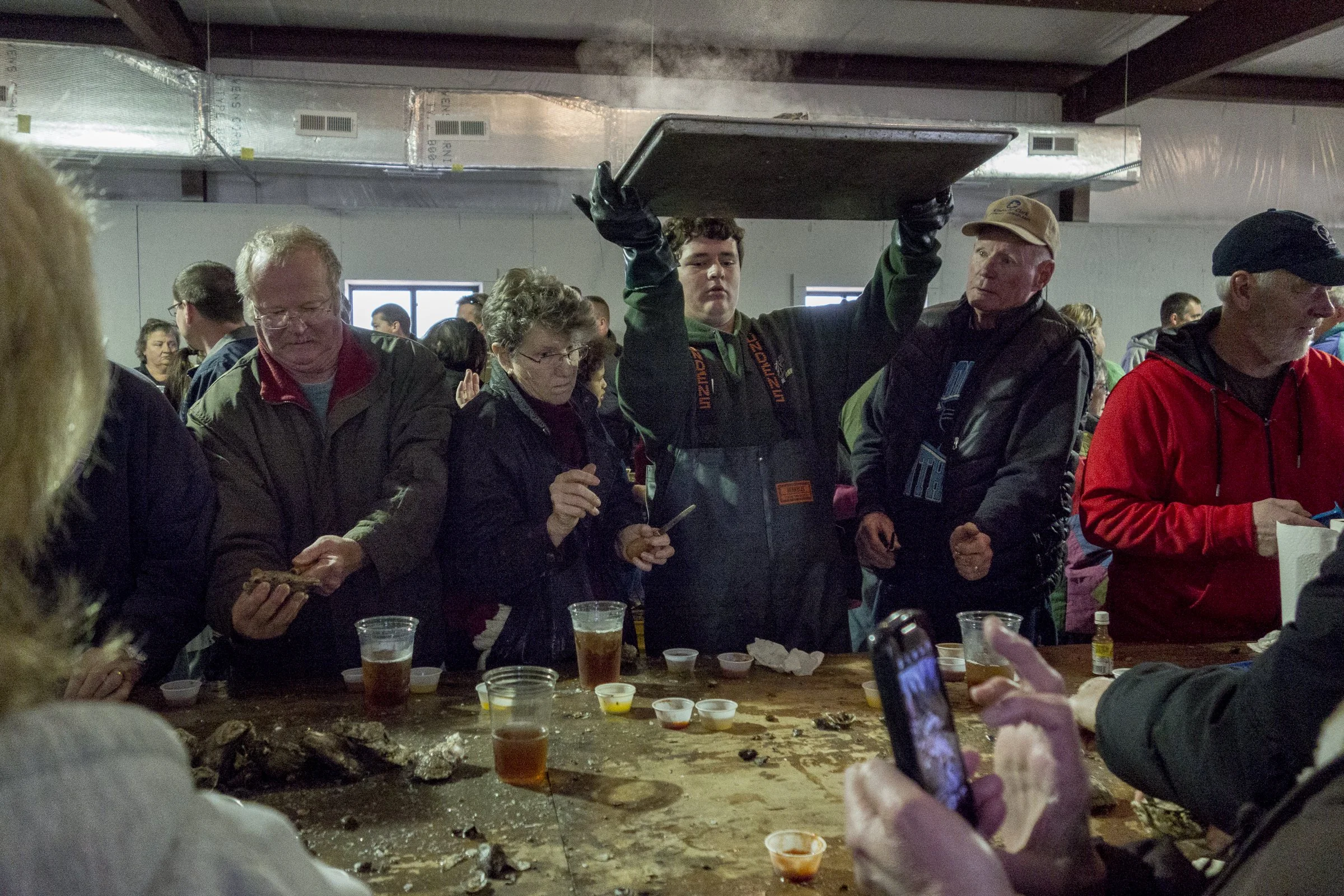
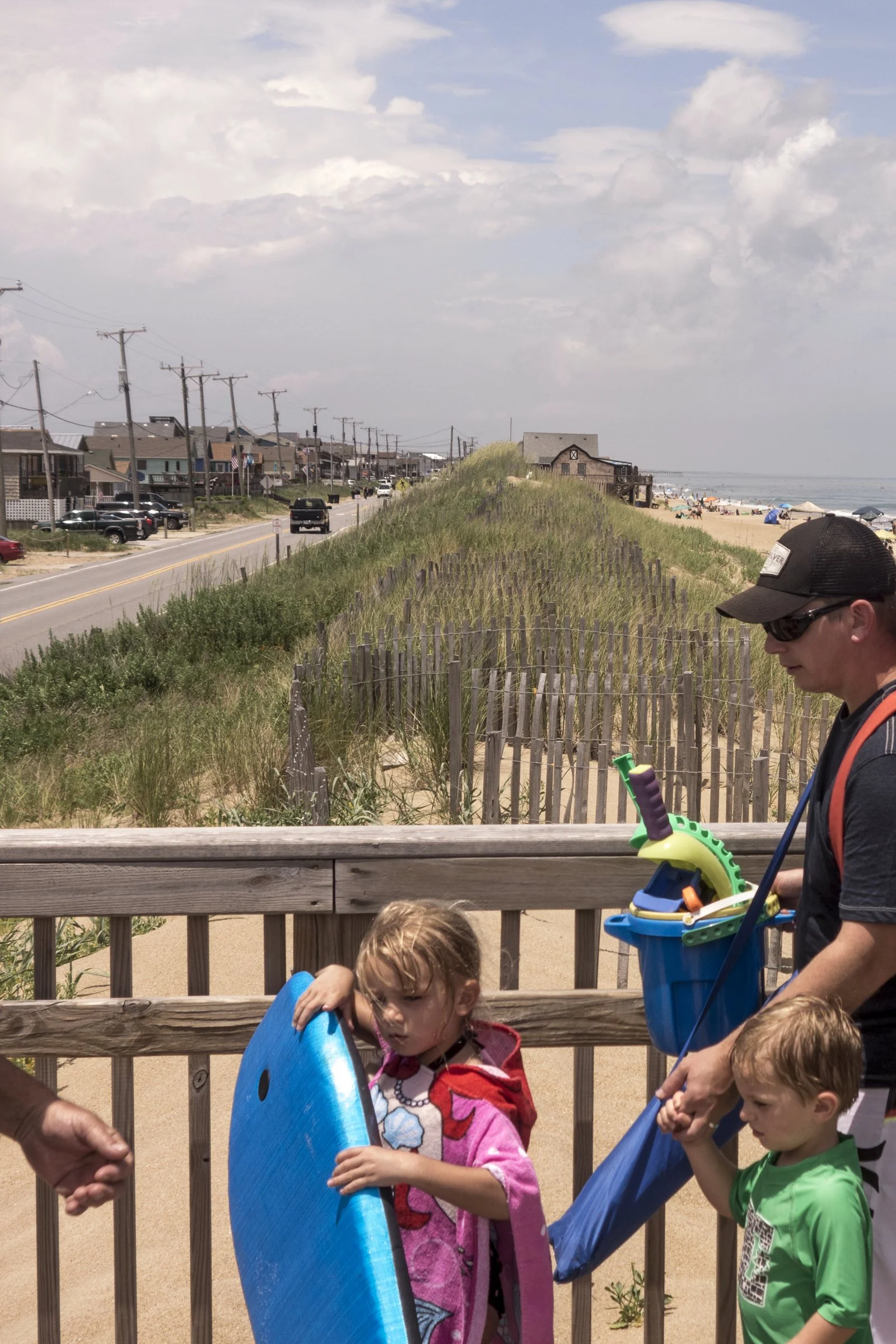
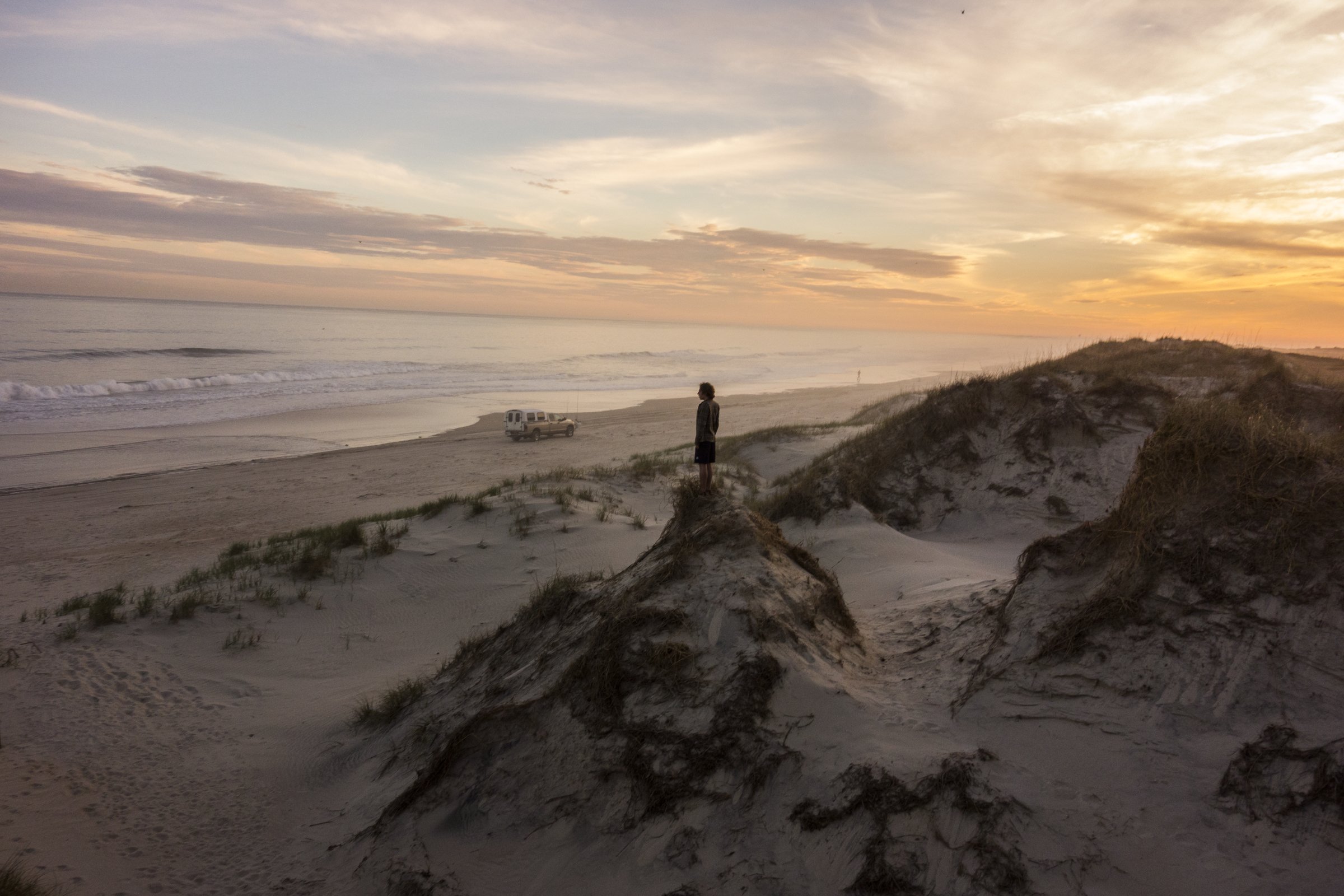
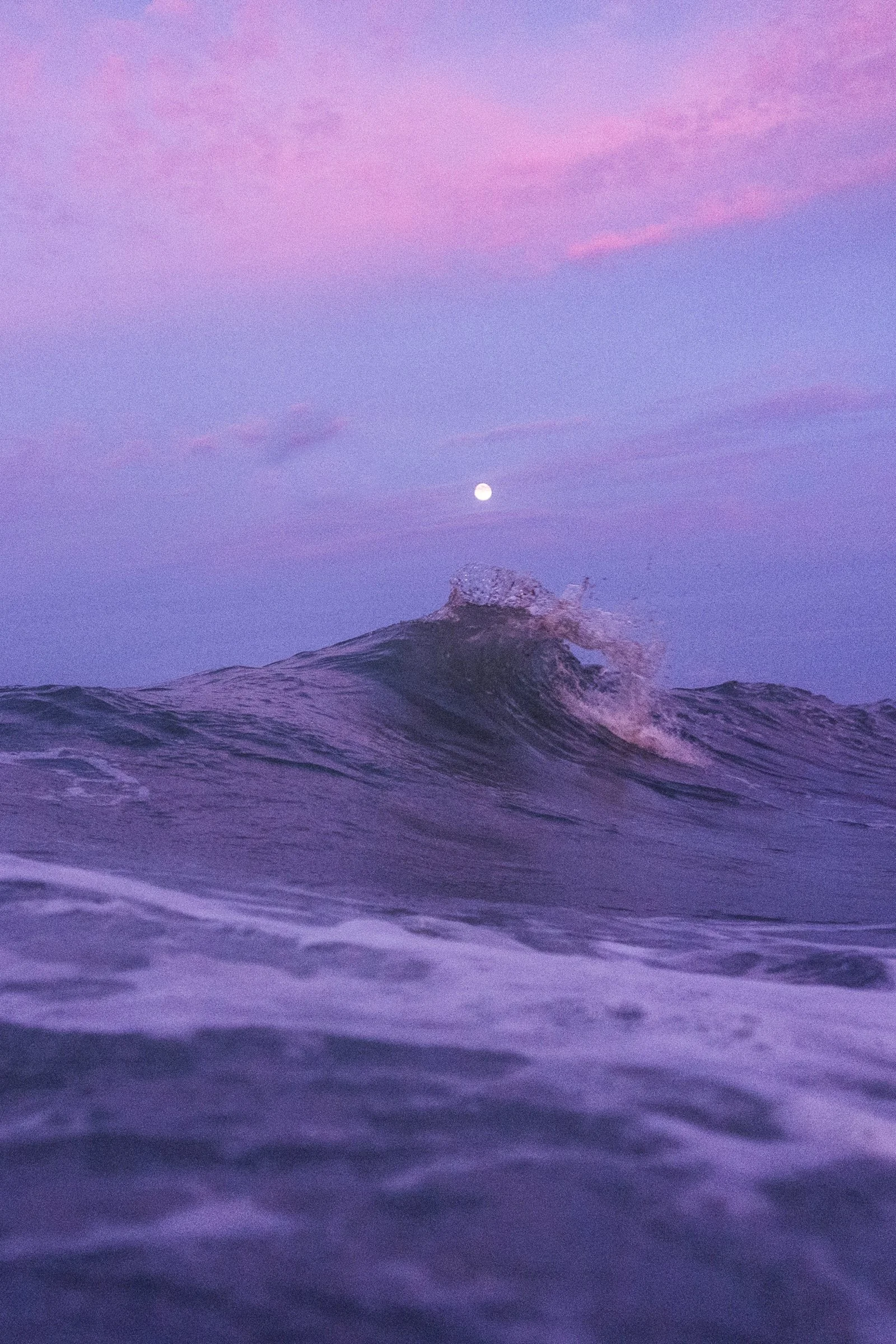
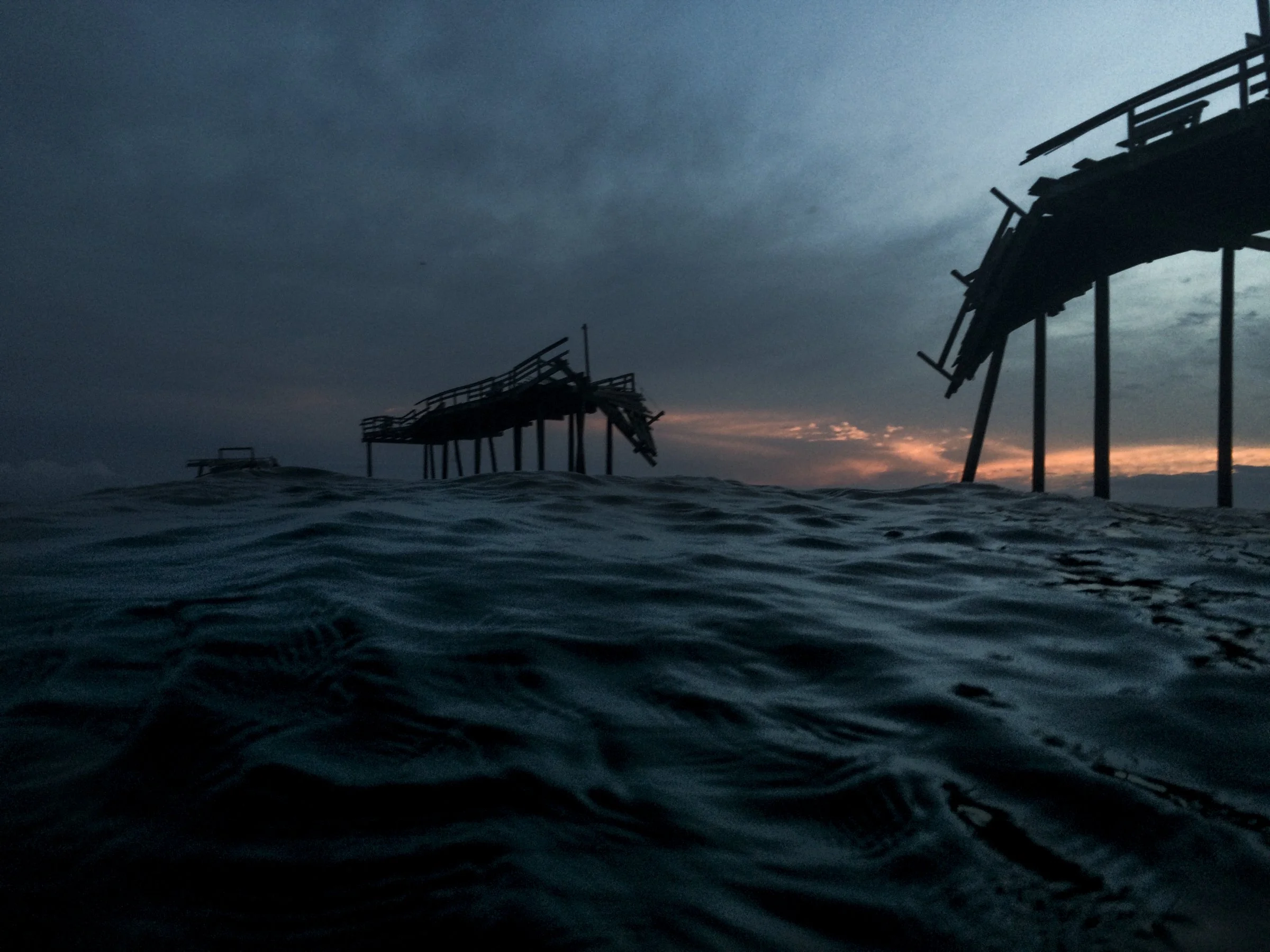
The Outer Banks is one of the most visited coastlines in America and one of the most geologically alive. What was once a string of isolated fishing communities and hunting camps is now an engine of seasonal tourism, generating over $1.5 billion annually. In Dare County, 47 percent of all housing units are classified as seasonal or recreational use, a figure that shapes land values, infrastructure, and the texture of daily life for the people who stay year round and call this place home.
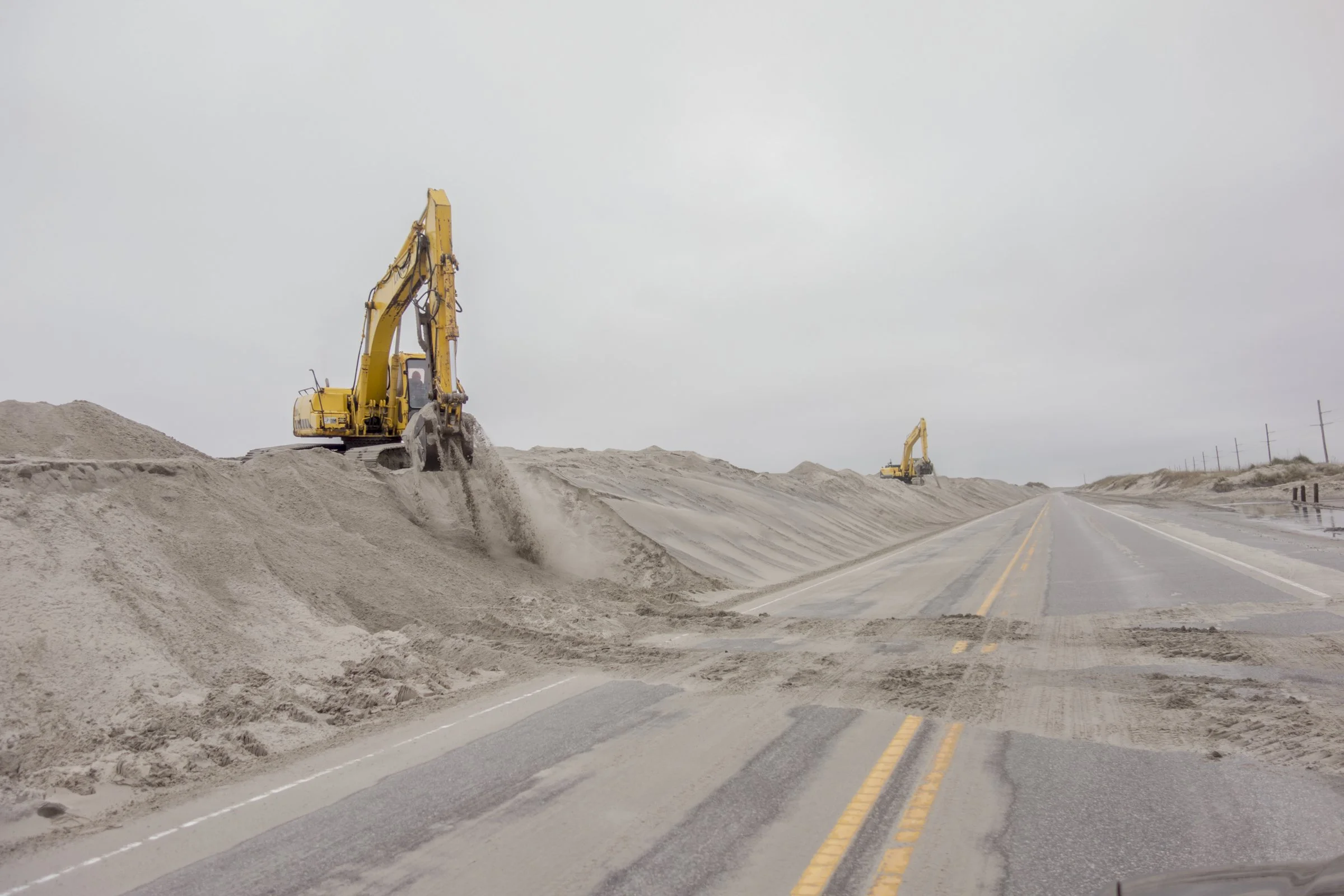
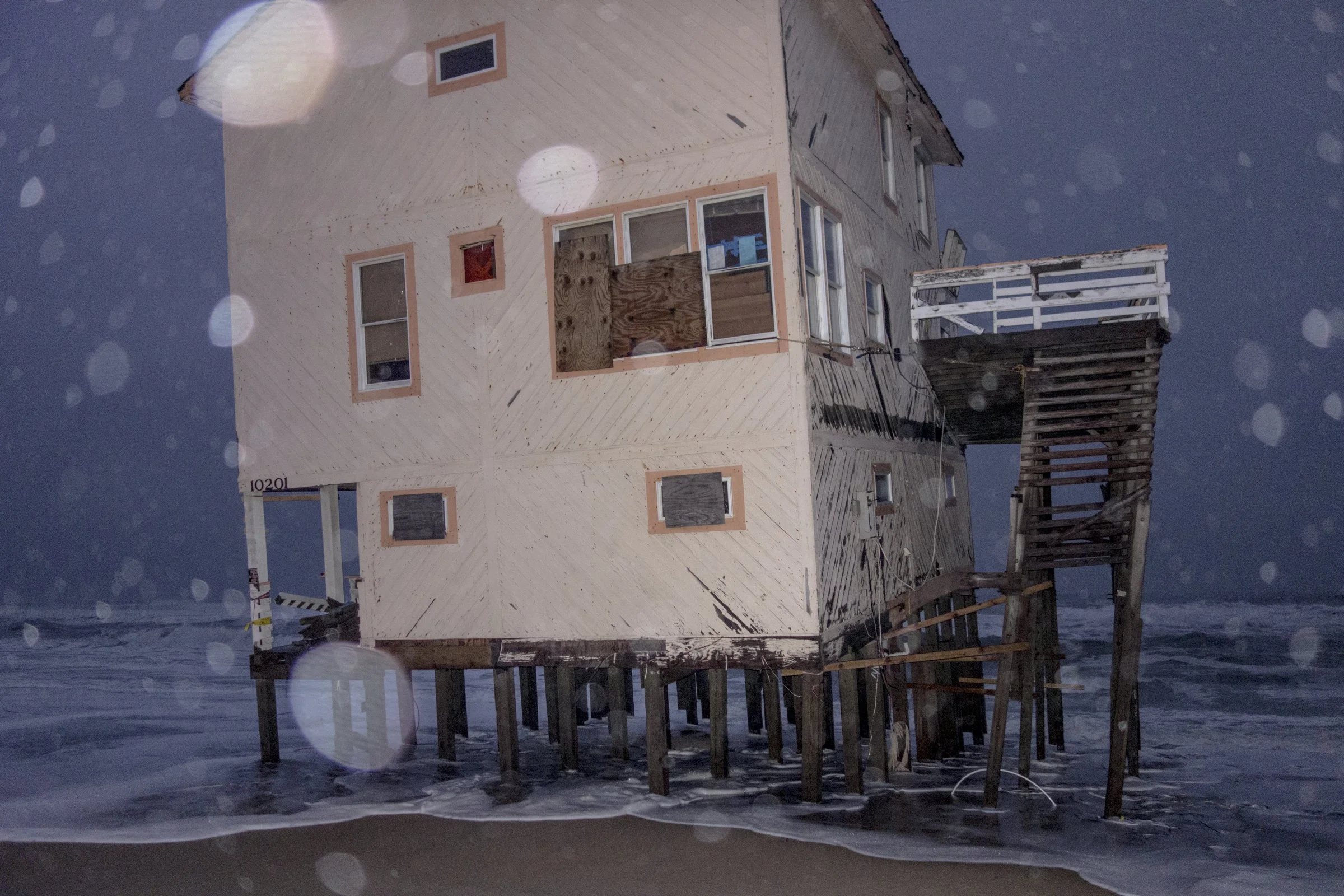
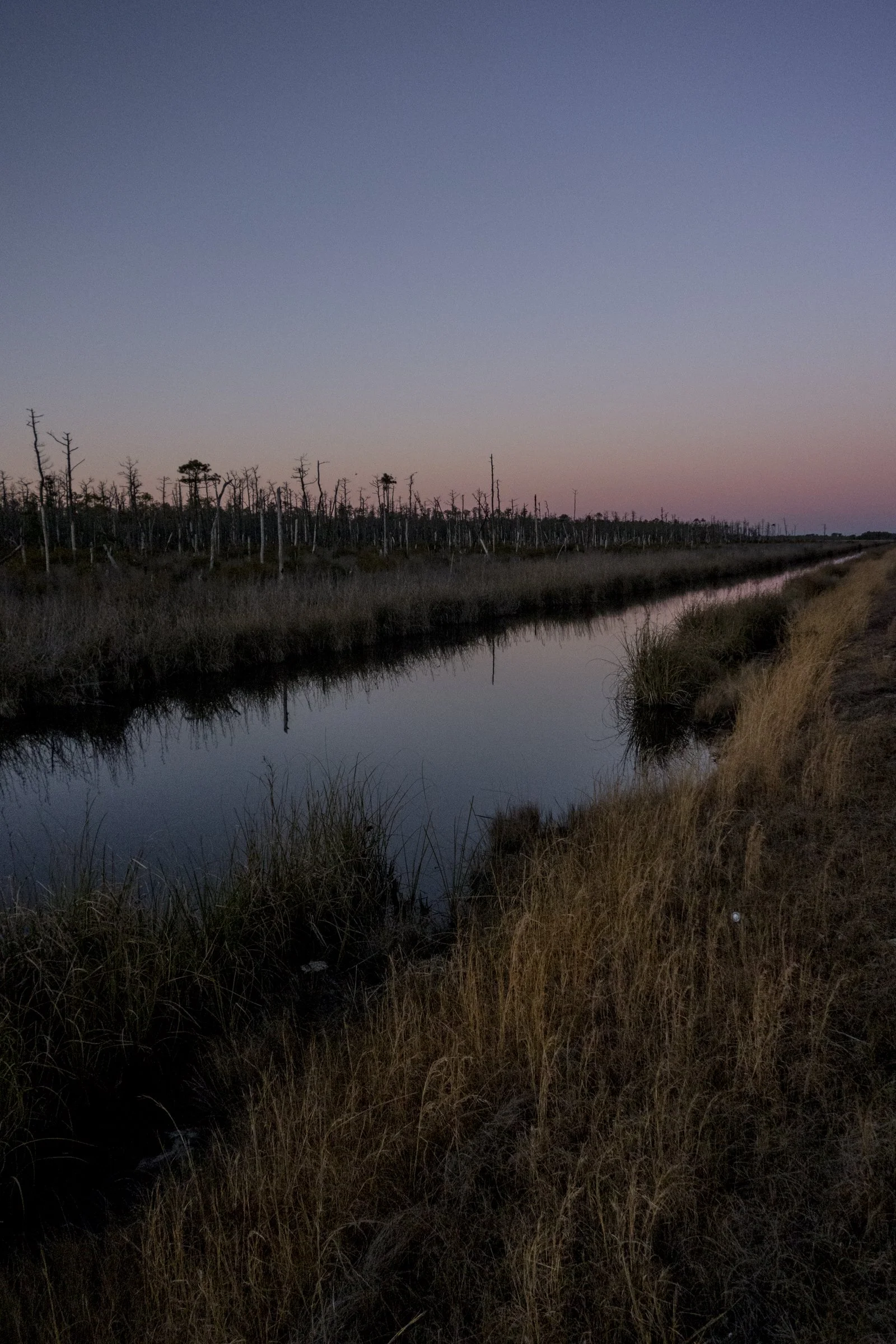
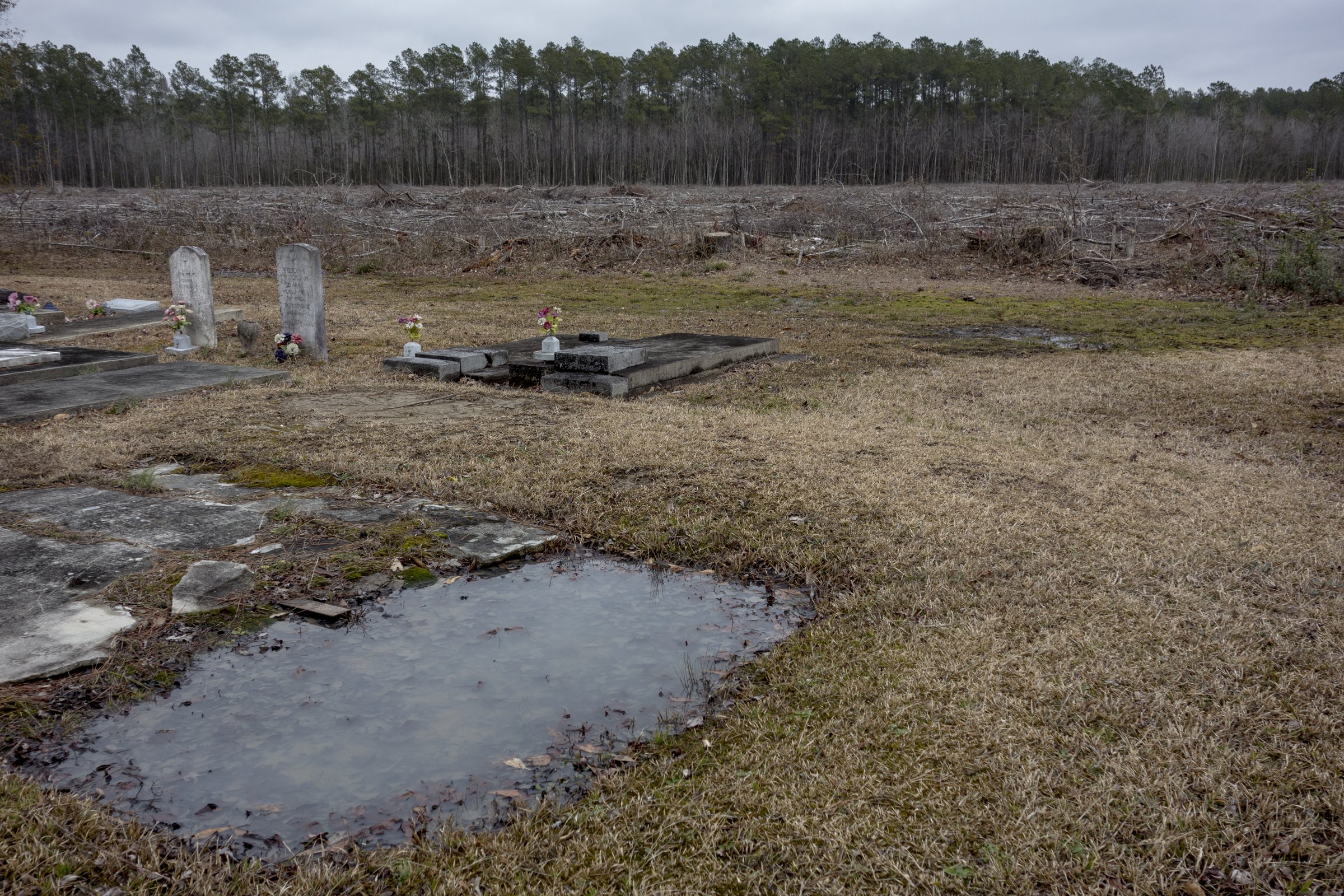
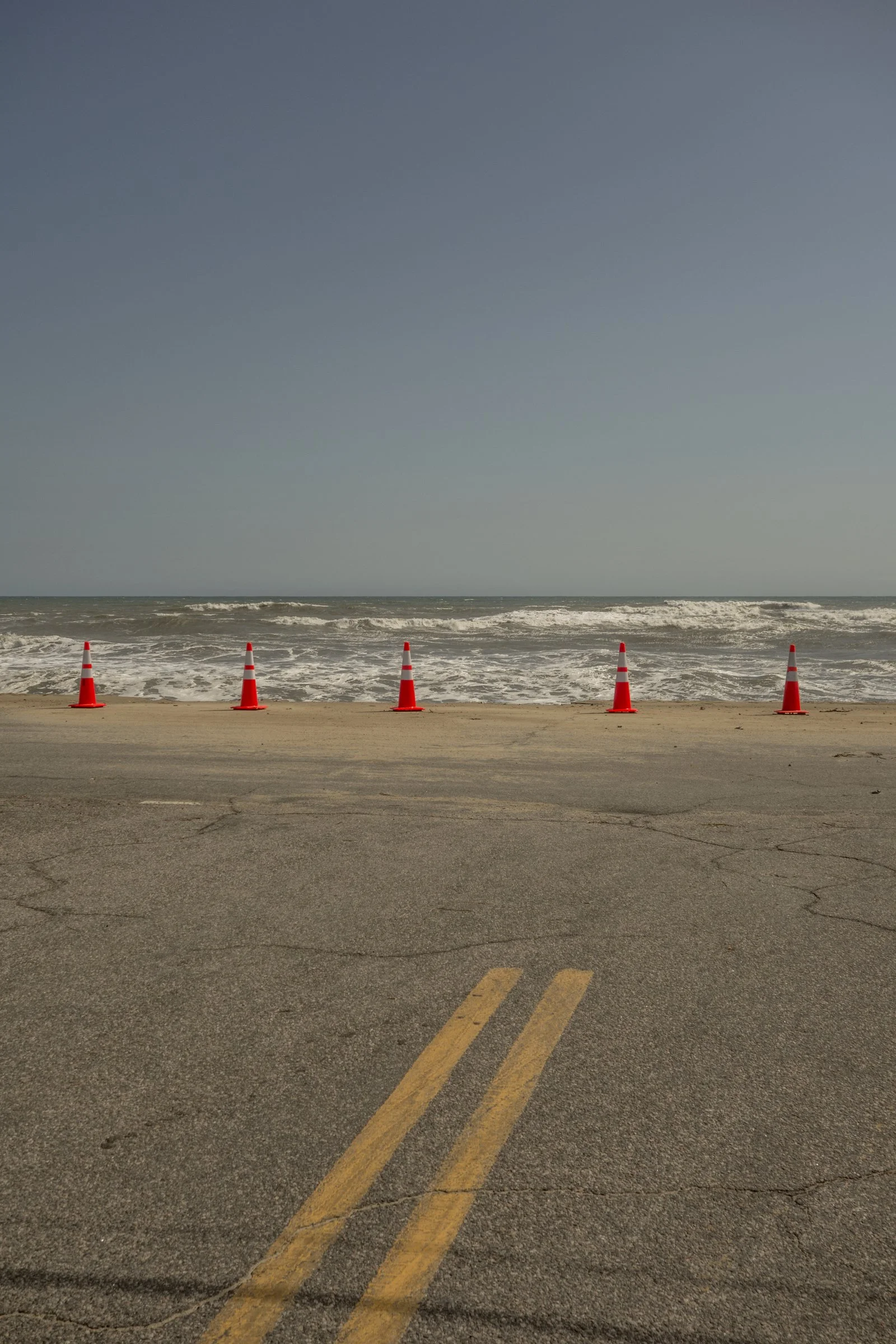
The land itself is in constant motion. Sea levels along North Carolina's coast have risen up to 11 inches since 1950 and are accelerating at two to three times the global average. Barrier islands have always migrated naturally toward the mainland, a slow adaptive process. Roads, construction, hardened shorelines, and engineered resistance have interrupted that process, while wetlands convert to open water and saltwater intrusion pushes into interior forests. This work is made in that landscape, alongside the people who know it most intimately, who have chosen it fully, and who continue to shape their lives around a coastline that is itself always changing.